
2026 Landscape Performance Program is Underway!
LFA’s Landscape Performance Case Studies (LPCS) Program funds research that connects academic teams with leading design practices to assess the performance of completed urban landscape projects against their original design goals.
Now in its third year, the 2026 LPCS Program is supporting two teams—one on the east coast and one on the west coast. The teams will assess two quite different projects, however, both feature restored ecological systems, increased urban biodiversity, and have created places with cultural connections that encourage people-nature interaction.
Here are the projects, people and practices involved with this year’s LPCS Program:
Waalbiirniny Waabiny Boodja, Perth
Client: Perth Children’s Hospital
University: UWA School of Design, Perth
Academic Leads: Prof Maria Ignatieva and Dr Simon Kilbane
Student Assistant: Congcong Zhao, PhD student
Practice Partner: Hassell Studio, Perth
Practice Liaison: Ryan Lucy, Associate Landscape Architect
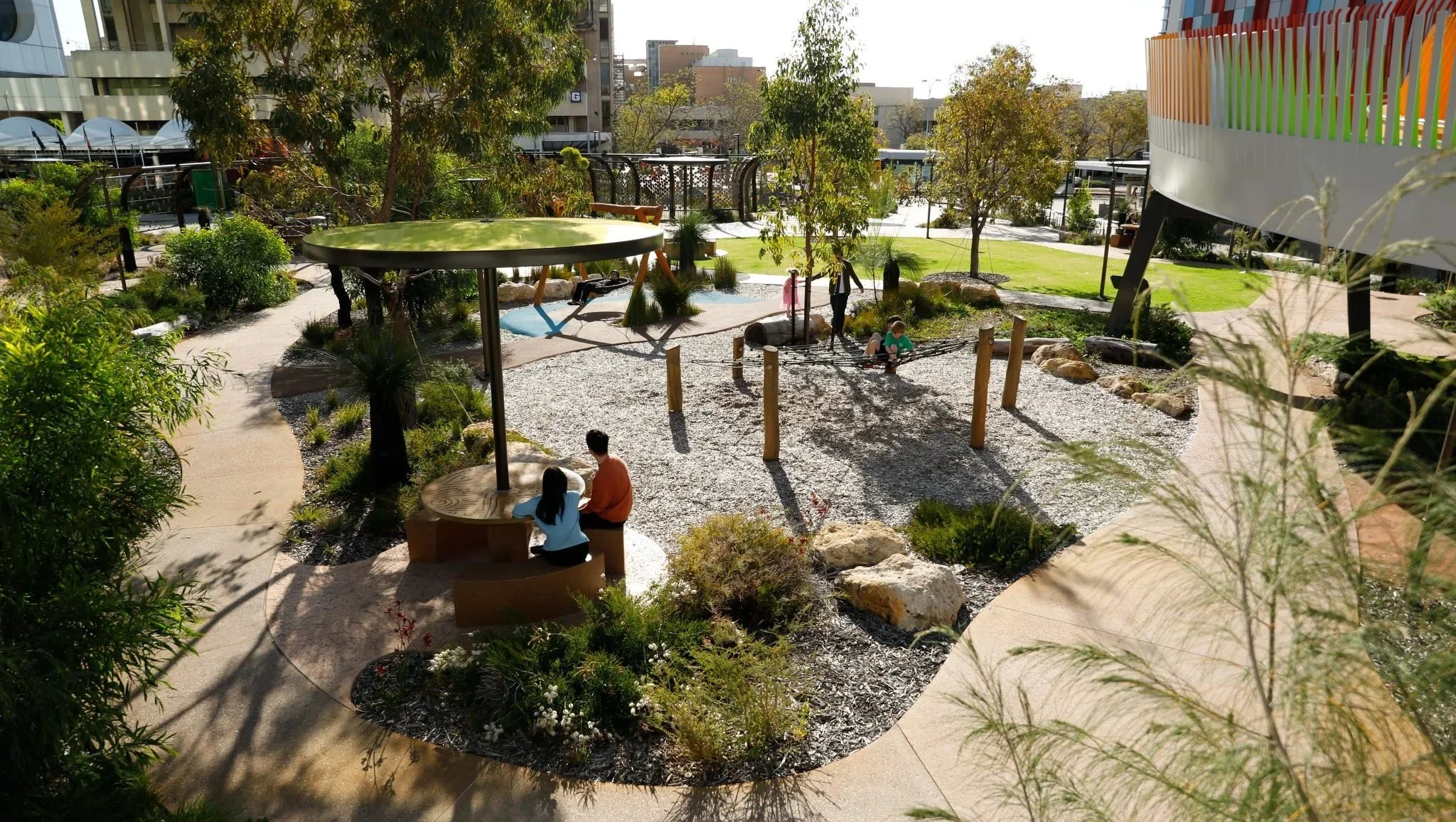
Waalbiirniny Waabiny Boodja, a new play environment at the Perth Children’s Hospital designed by Hassell Studio, will be assessed by a team from the University of Western Australia. (Photo: Robert Frith)
Hanlon Park/Bur’uda, Brisbane
Client: Brisbane City Council
University: QUT School of Arch and Built Environment, Brisbane
Academic Leads: Dr Dan Nyendega and A/Prof Debra Cushing
Student Assistant: Lauren Williams, PhD student
Practice Partner: Tract Consultants, Brisbane
Practice Liaisons: Bridget McGuigan, Principal; Clare Mayberry, Climate and Biodiversity Strategist
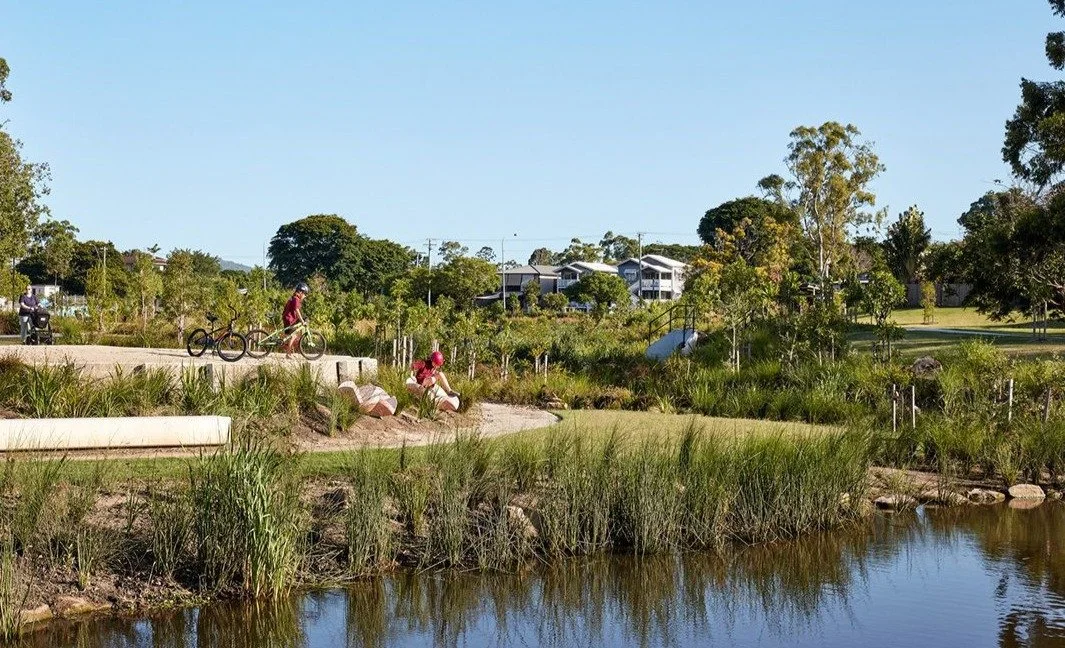
Hanlon Park/Bur’uda, once a concrete-lined drain is now a naturalised waterway through an inner suburb of Brisbane. Tract Consultants, the lead landscape architects, will work with a team from QUT to assess its landscape performance. (Photo: Christopher Frederick Jones)
Building a body of knowledge
Over the coming six months, the teams will work with LPCS Program Manager, Linden Crane, and Program Director, Linda Corkery. Each team will produce a case study summarising the key findings from their investigations in a succinct, illustrated report, including lessons learned. An accompanying methods report will document how the team researched, measured and analysed the project’s performance relative to environmental, social, cultural and economic benefits.
Following a peer-review process and a final editorial review, the two teams’ Case Study Summaries and Methods Reports will be publicly available on the LFA website in early 2027.